Penn State Opens New Semiconductor Research Facilities with $4.3 Million Support
The university has installed advanced deposition and characterisation equipment to support research into 2D semiconductors, gallium nitride and gallium oxide, with funding linked to the US CHIPS Act.
Penn State University and the Midwest Microelectronics Consortium (MMEC) have opened new semiconductor research facilities at the university's Millennium Science Complex in Pennsylvania, supported by $4.3 million in infrastructure funding and in-kind assistance, alongside additional university investment. The facilities were formally inaugurated on 19 October 2026 and announced on 19 November. The investment forms part of the US Microelectronics Commons programme established under the CHIPS and Science Act, with the aim of helping researchers develop semiconductor materials and processes suitable for commercial manufacturing.
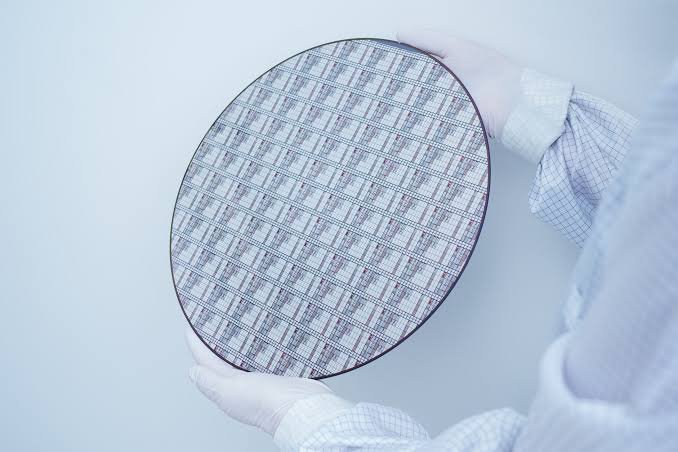
The new equipment includes a metal-organic chemical vapour deposition (MOCVD) system for growing semiconductor films, an atomic force microscope (AFM) for examining wafer surfaces and a metal evaporation system for producing electrical contacts. The facilities will support research into two-dimensional semiconductor materials, where reducing defects and producing reliable electrical contacts remain major manufacturing challenges. Researchers will also investigate wide-bandgap and ultrawide-bandgap materials, including gallium nitride (GaN) and gallium oxide, for power electronics operating at higher voltages and temperatures. Joan Redwing, Distinguished Professor at Penn State, said the equipment would allow materials and processes developed in university laboratories to be tested on larger wafers, bringing them closer to industrial manufacturing requirements.
The equipment will be available to university researchers, external users and MMEC partners, including smaller semiconductor companies that may lack access to specialised manufacturing tools. The consortium has nearly 600 members across industry, academia and government, with the new facilities intended to support technology development and workforce training. Matt Casto, Chief Executive Officer of MMEC, said the investment would improve access to semiconductor research infrastructure and help move promising technologies towards domestic production. Penn State will also provide students and postdoctoral researchers with practical experience using industry-compatible equipment, supporting the development of engineers and scientists for the US semiconductor manufacturing sector.