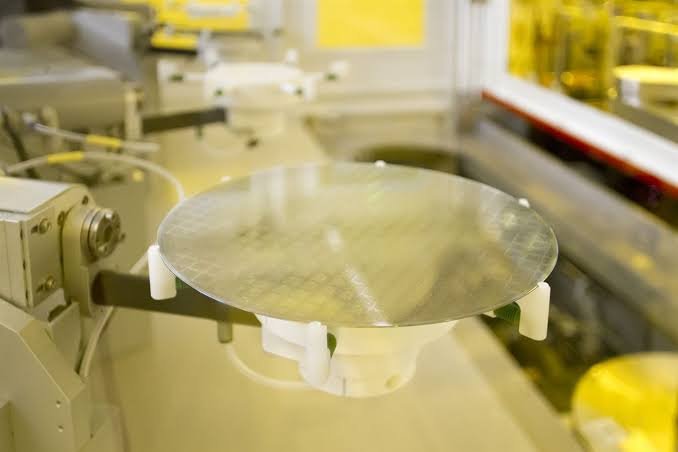
The company’s expansion will follow two parallel tracks. The first will involve converting the currently idle 200mm Fab 6 in Arai, Niigata, into a 300mm facility dedicated to silicon photonics and advanced optical packaging. Tower also plans to increase production at its existing 300mm Fab 7 in Uozu, Toyama, which already manufactures silicon-germanium and silicon photonics products.
The first phase is expected to be ready for full production in the fourth quarter of 2027. Tower expects this stage to support approximately US$3.6 billion in revenue and US$1.2 billion in net profit in 2028.
Under the second track, Tower plans to build another 300mm fab next to Fab 7. The new facility is intended to significantly increase production of silicon-germanium and silicon photonics devices, with a larger contribution to the company’s financial performance expected from 2029 onwards. Once both expansion tracks are operational, Tower expects its Japanese manufacturing capacity to reach the equivalent of 45,000 300mm wafers per month, around 40 times its 2025 level.
The investment comes as demand for optical connectivity rises alongside the growth of AI and data-centre infrastructure. Tower also sees the Japanese expansion as a foundation for future co-packaged optics (CPO) technologies, which bring optical connectivity closer to computing devices to support higher bandwidth and improved power efficiency.
Japan’s Ministry of Economy, Trade and Industry (METI) is expected to provide around US$1 billion towards the programme, while Tower will contribute approximately US$3 billion. The company also plans to recruit about 200 additional employees as part of the expansion.