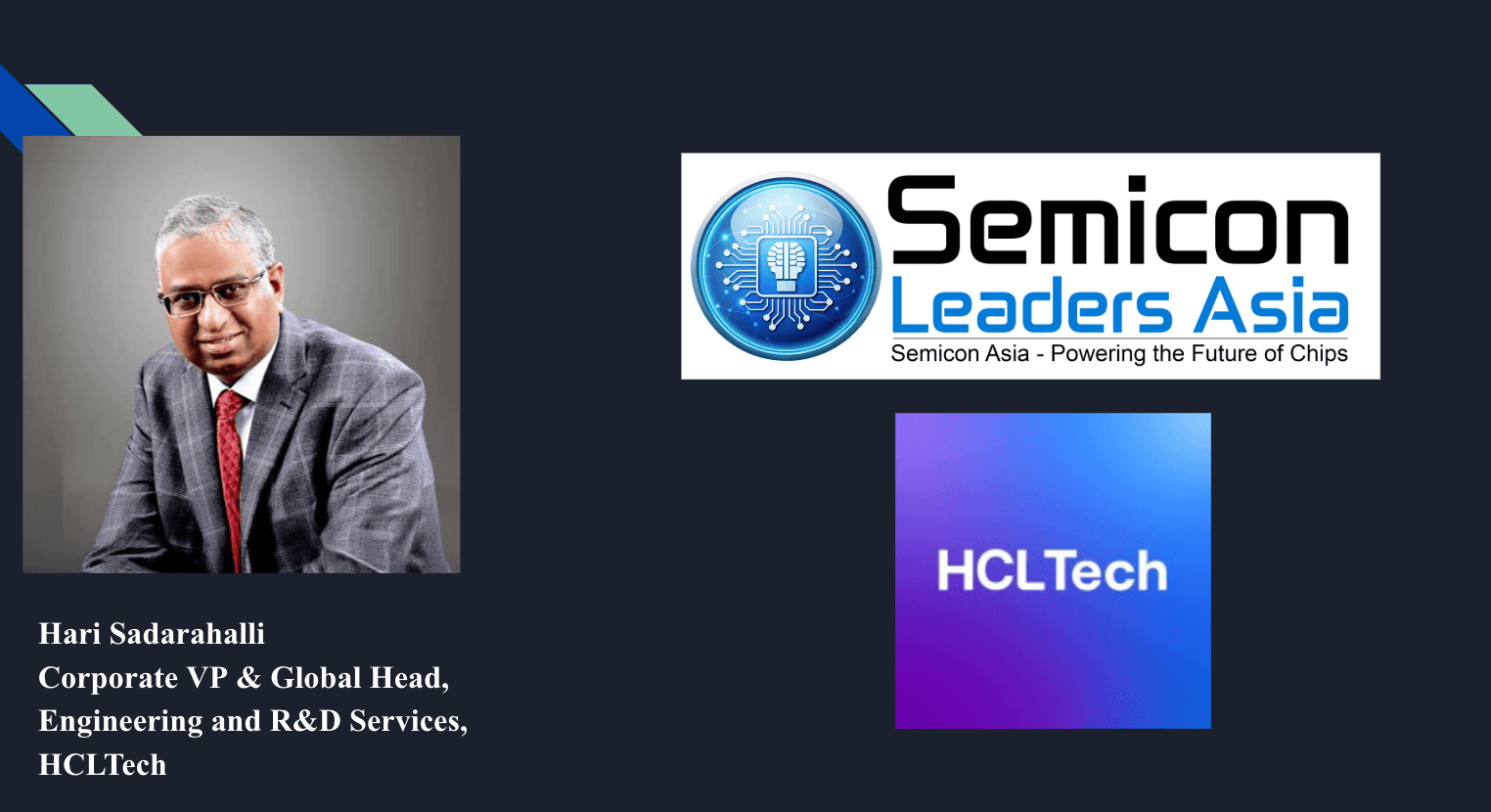
As Japan advances its next-generation semiconductor manufacturing ambitions, India is emerging as an important partner in chip design and engineering. HCLTech and Rapidus have inaugurated two semiconductor development centres in Bengaluru and Hubli, focusing on mask design, process design kits, chip layout and design technology co-optimisation. Semicon Leaders Asia speaks with Hari Sadarahall...
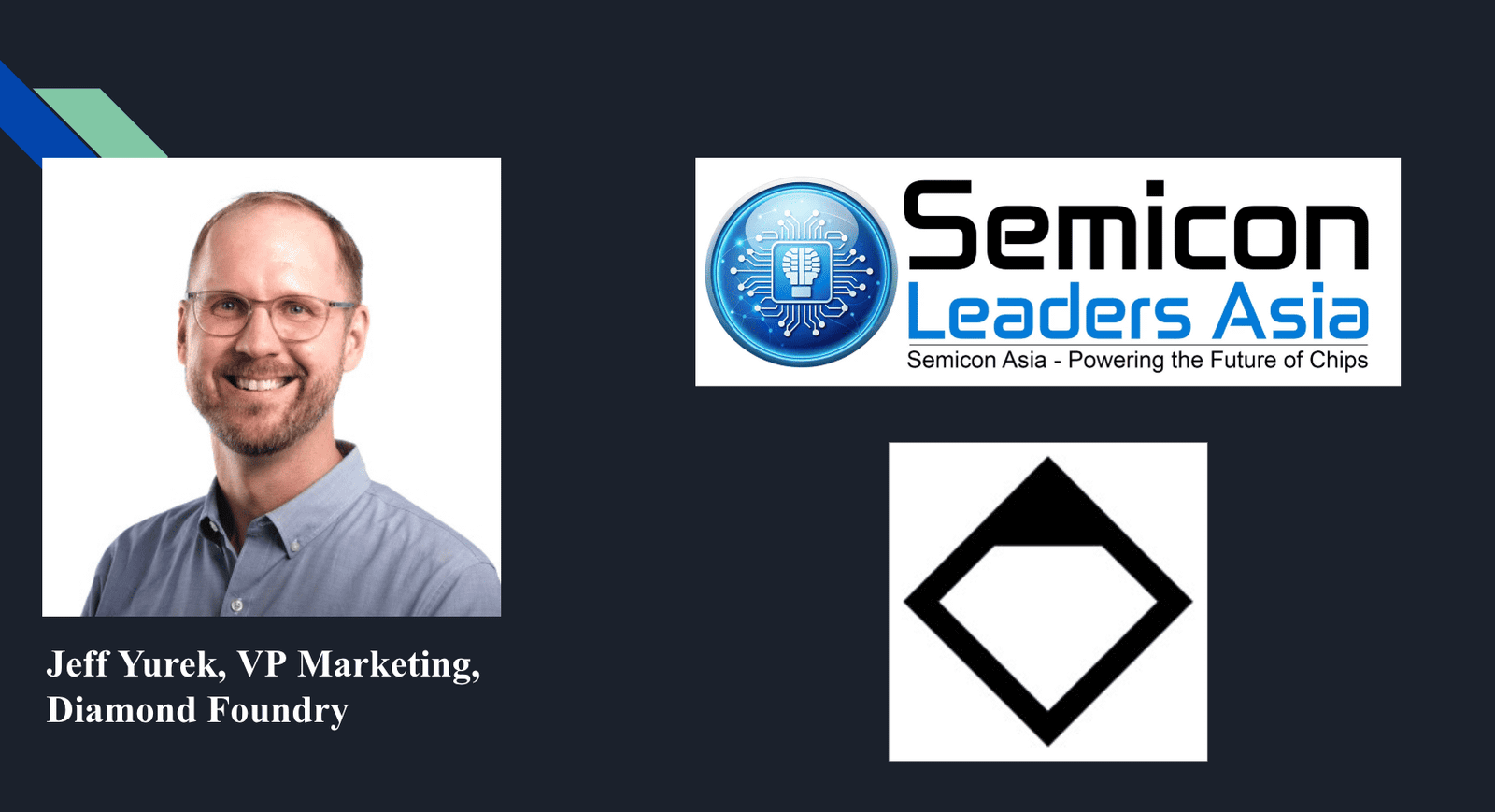
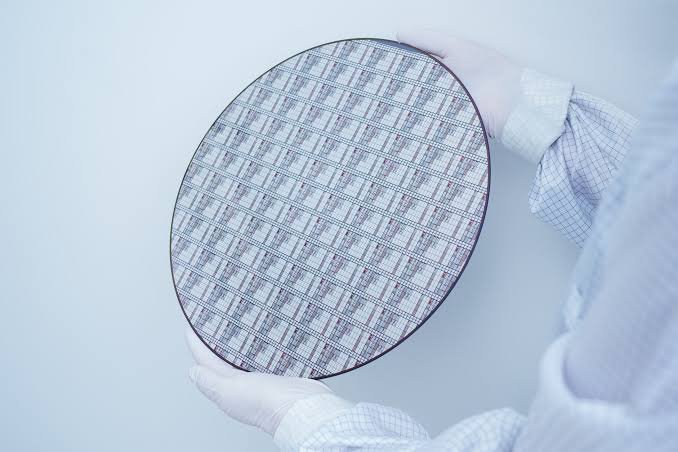
As AI processors become more powerful, managing heat is emerging as a major challenge for semiconductor manufacturers. Diamond Foundry has developed a 200mm single-crystal diamond wafer, marking a step towards using diamond in mainstream chip manufacturing. The company sees near-term opportunities in thermal management, with longer-term ambitions for diamond transistors and larger wafer production...
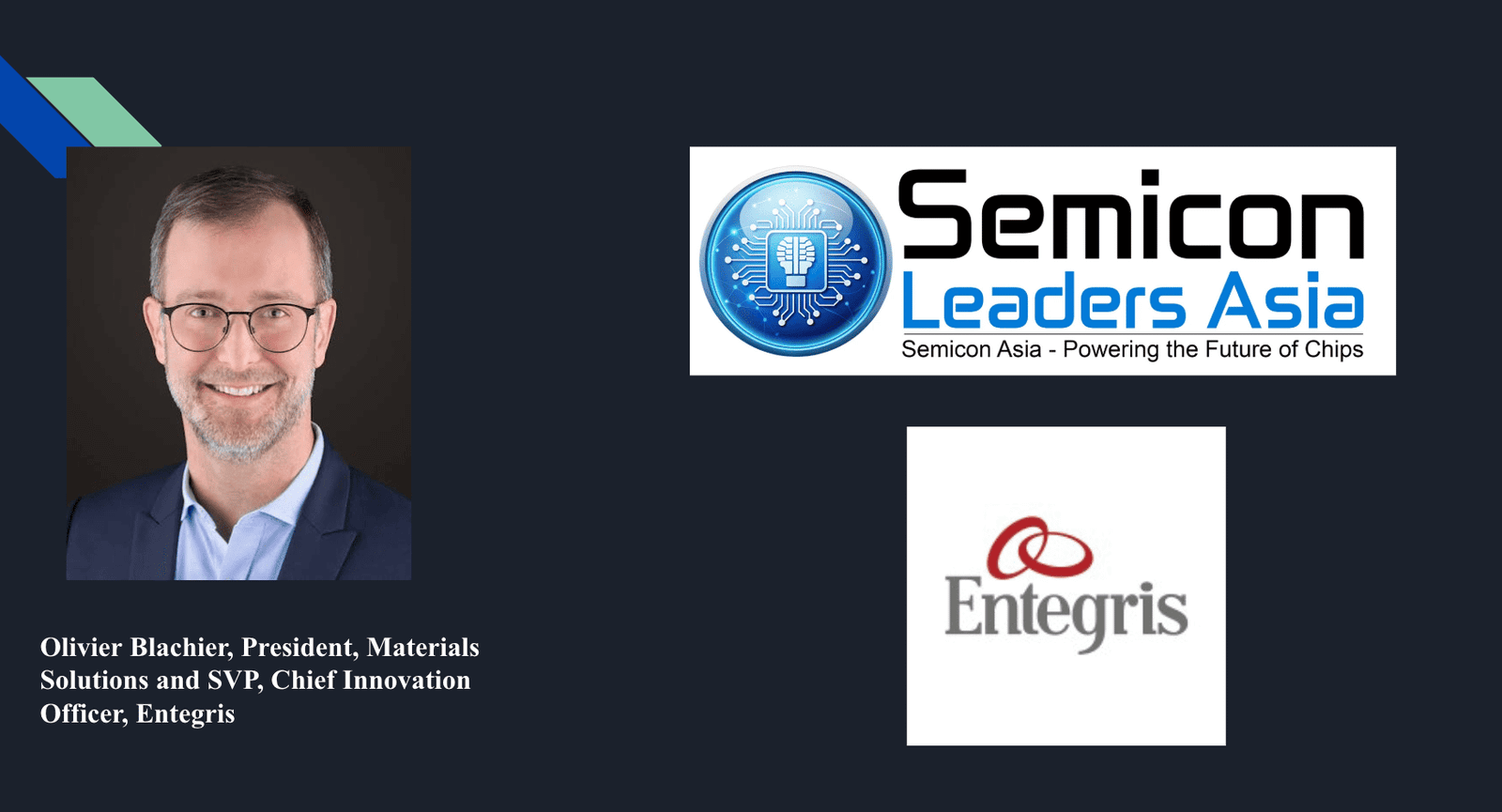
As AI processors become more powerful and chipmakers adopt advanced packaging and 3D integration, managing heat is becoming a major challenge. Entegris is expanding its thermal management materials portfolio through silicon carbide and synthetic diamond technologies, supported by new manufacturing capacity in Taiwan and research in the United States. Semicon Leaders Asia speaks with Oliv...
For thirty years, computing has had one server side and one client side. The server had a fixed address, a published interface, trained operators, monitoring and a billing record. The client did none of that work: it opened a connection, sent a request and consumed the response. The server lived in the data center; the clients were your phone, your car, the camera above t...
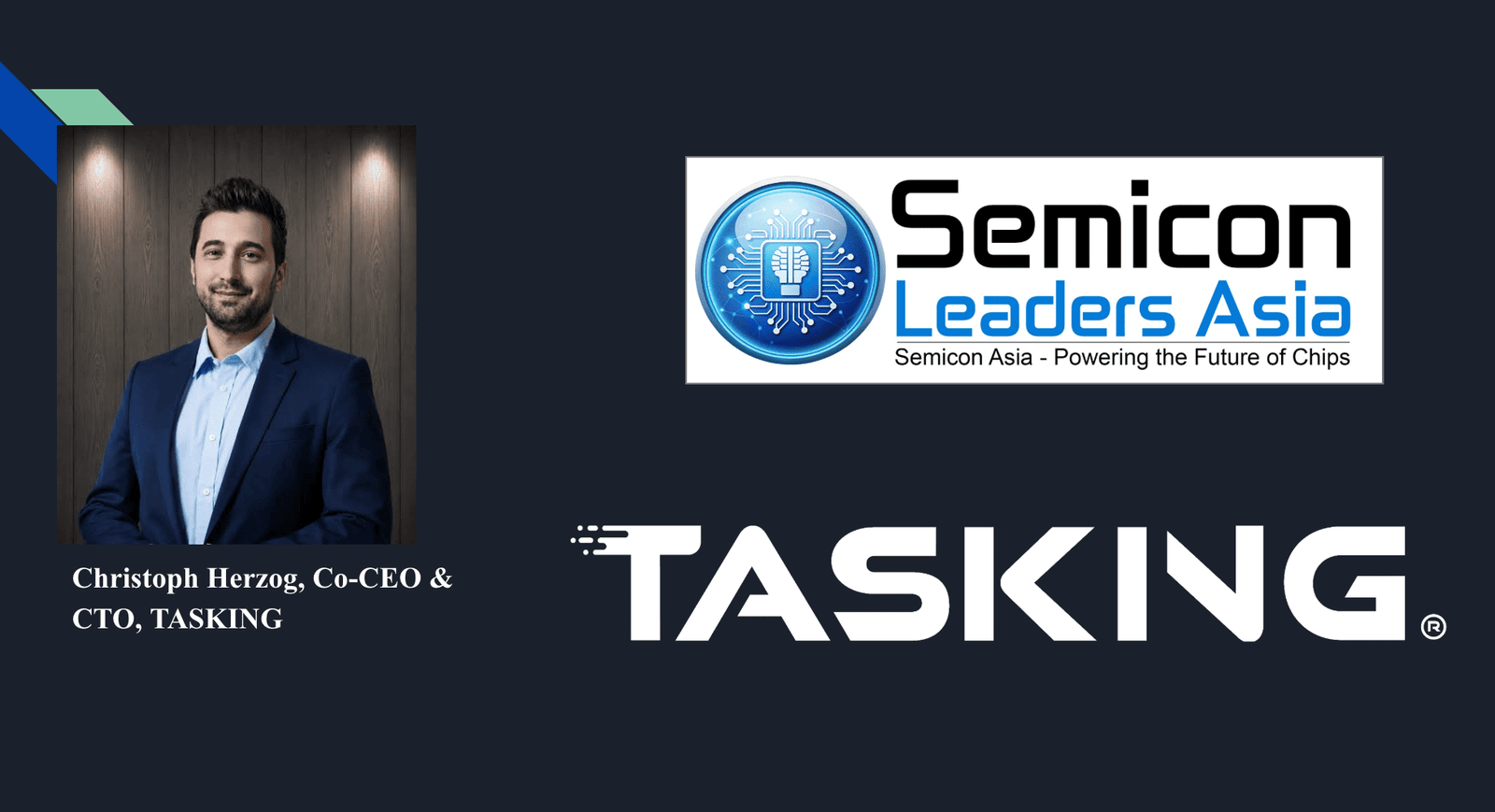
As automotive manufacturers move towards software-defined vehicles and zonal architectures, developing secure and reliable software is becoming increasingly complex. TASKING has introduced a unified development toolchain for NXP’s S32K5 microcontroller family, bringing compilation, debugging and verification into a single environment to simplify development and certification. Semicon Leaders...
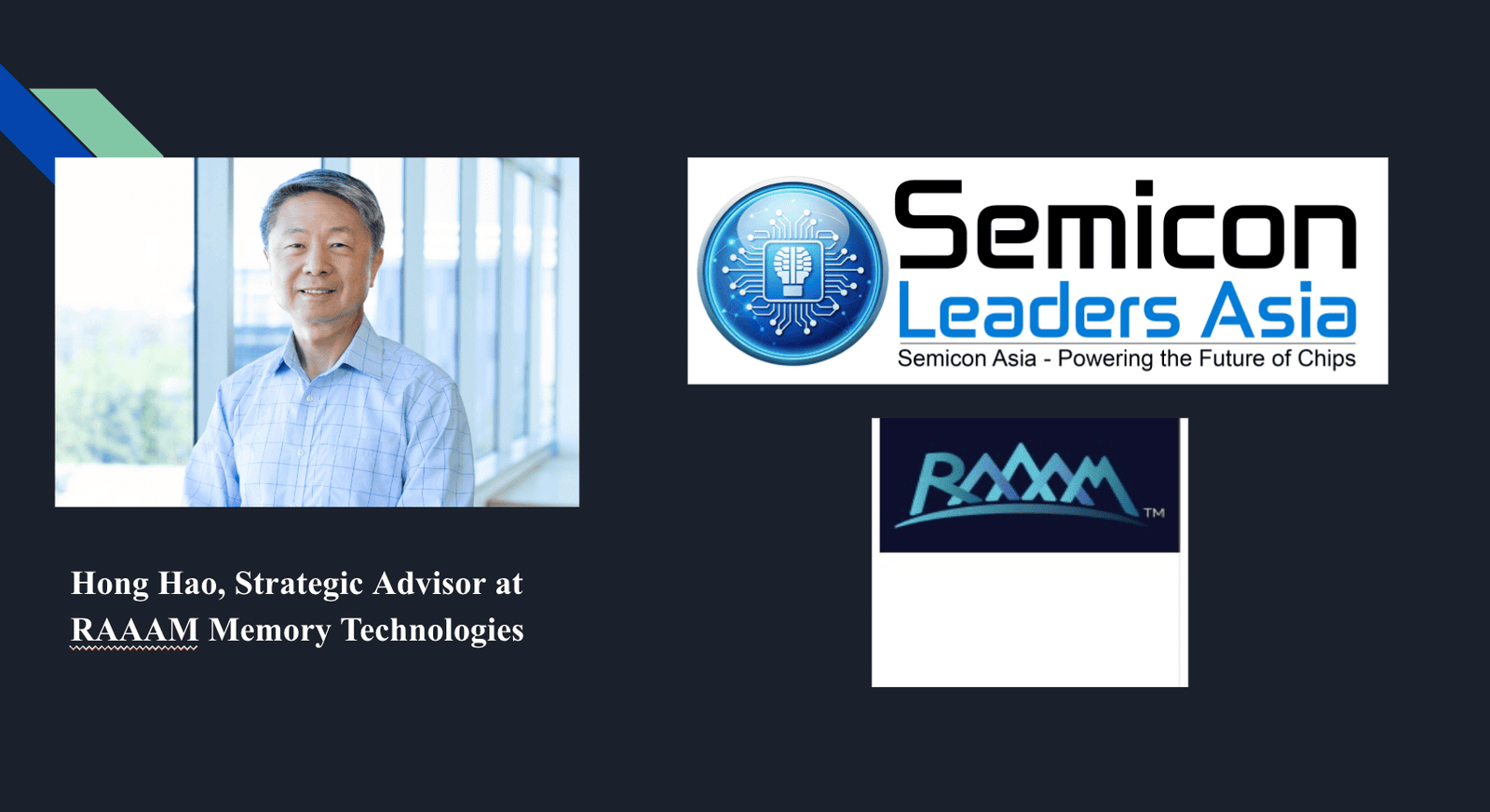
As AI chips demand greater memory capacity, SRAM scaling is becoming a major challenge for semiconductor manufacturers. RAAAM Memory Technologies aims to address this through its GCRAM technology, designed to reduce chip area and power consumption.Semicon Leaders Asia speaks with Hong Hao, Strategic Advisor at RAAAM Memory Technologies, about GCRAM’s commercial potential, CMOS compatibi...
For semiconductor equipment and materials suppliers, 2027 is shaping up as a big capacity year. TSMC expects new 3nm capacity in both Taiwan and Arizona. Micron is preparing its first new US memory fab for wafer output. SK hynix is opening the first production phase of its Yongin cluster. Rapidus still targets 2nm mass production in Japan. India expects its first commercial front-end fab to begin...
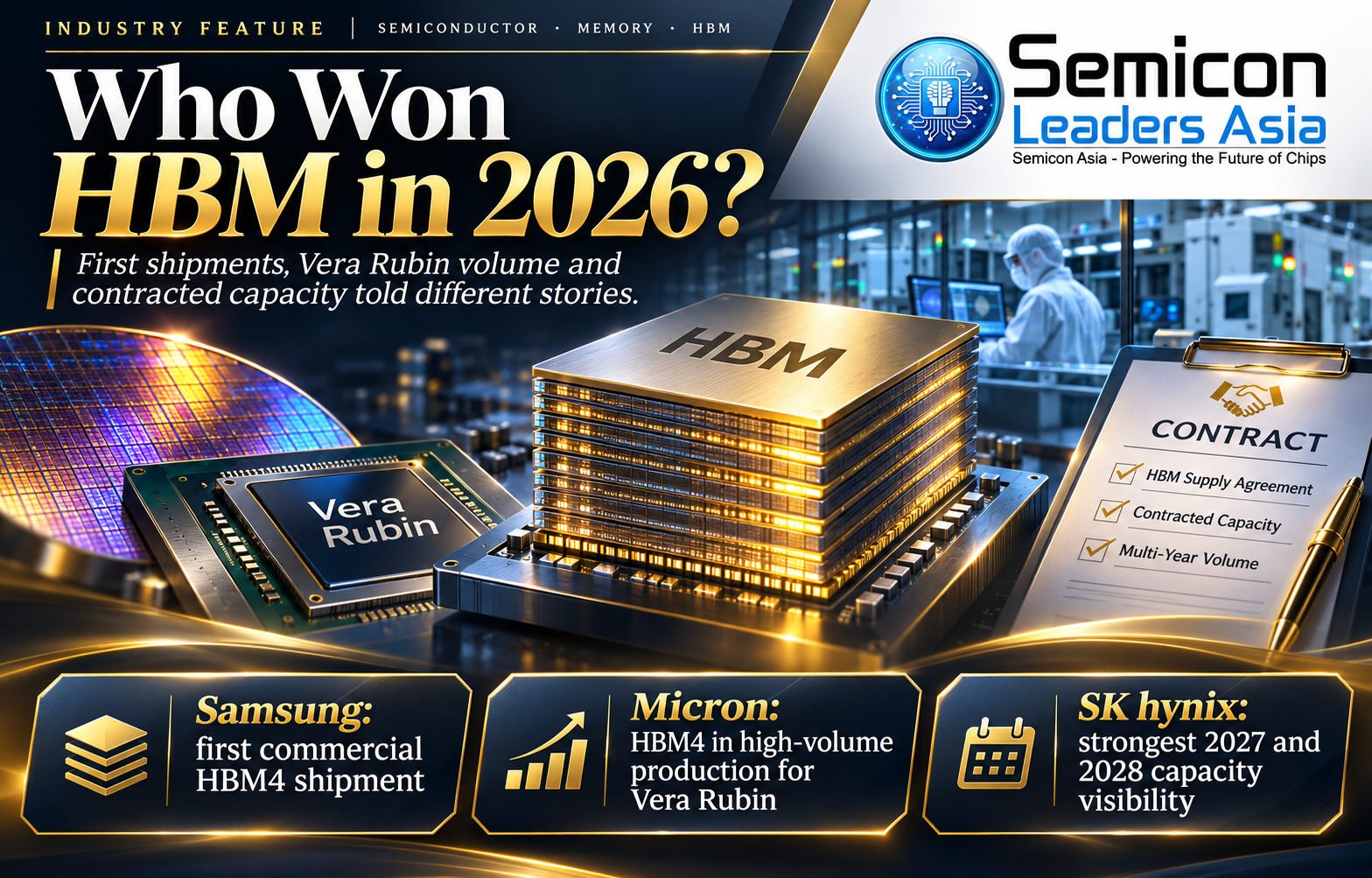
Memory entered 2026 as one of the tightest constraints on the AI hardware market. It is ending the year as one of its biggest profit pools. The third-quarter numbers make the point. SK hynix reported revenue of 104.6 trillion won and operating profit of 83.3 trillion won, a margin of roughly 80%. A day later, Samsung Electronics posted 107.4 trillion won of operating profit, the first time any te...
As data center power levels scale from hundreds of kilowatts to multi-megawatt AI clusters, protecting the systems against electrical faults while maintaining uninterrupted operation has become a strategic priority for data center operators. This raises the requirements against electrical fault protection and for predictive maintenance. Against this background, current sensing is evolving from a m...
As the semiconductor industry begins the 2nm manufacturing ramp and accelerates R&D toward the sub-2nm node, high numerical aperture (NA) extreme ultraviolet (EUV) lithography is emerging as a critical enabler of continued device scaling. By improving resolution and enhancing pattern fidelity, high NA EUV lithography is expected to play a central role in future semiconductor manufacturing. Her...
AlpSemi aims to transform this landscape by developing advanced power semiconductor devices specifically designed for solid-state circuit breakers (SSCBs). This approach addresses a key challenge: improving the efficiency, compactness and cost competitiveness of semiconductor-based protection. Founded in 2024 by Frédéric Dupont and Fabrice Letertre, both former executives at Soitec,...
For most of the past three years, the semiconductor industry has measured AI progress in one direction. Models have grown larger, clusters have grown denser, and accelerators have been paired with more high-bandwidth memory with each generation. That build-out has been remarkable, and it will continue. As we look toward 2027, though, the constraints shaping our industry are becoming as important a...
For most of the past decade, the semiconductor industry has answered AI's appetite for compute by just building more of it. More cores, more accelerators, more transistors, more advanced process nodes. It worked, and it worked remarkably well. But heading into 2027, with the continuing growth in model size, the exploding usage, the data needed, that playbook is running out of road. The reason is ...
As advanced packaging and semiconductor manufacturing become increasingly complex, demand for efficient, sustainable wafer-cleaning technologies is growing. SUSS is entering this market with GreenTec Solutions, expanding its photomask cleaning expertise into wafer-level applications. Semicon Leaders Asia speaks with Yuta Nagai, Senior Vice President, Photomask Solutions at SUSS, about the company'...
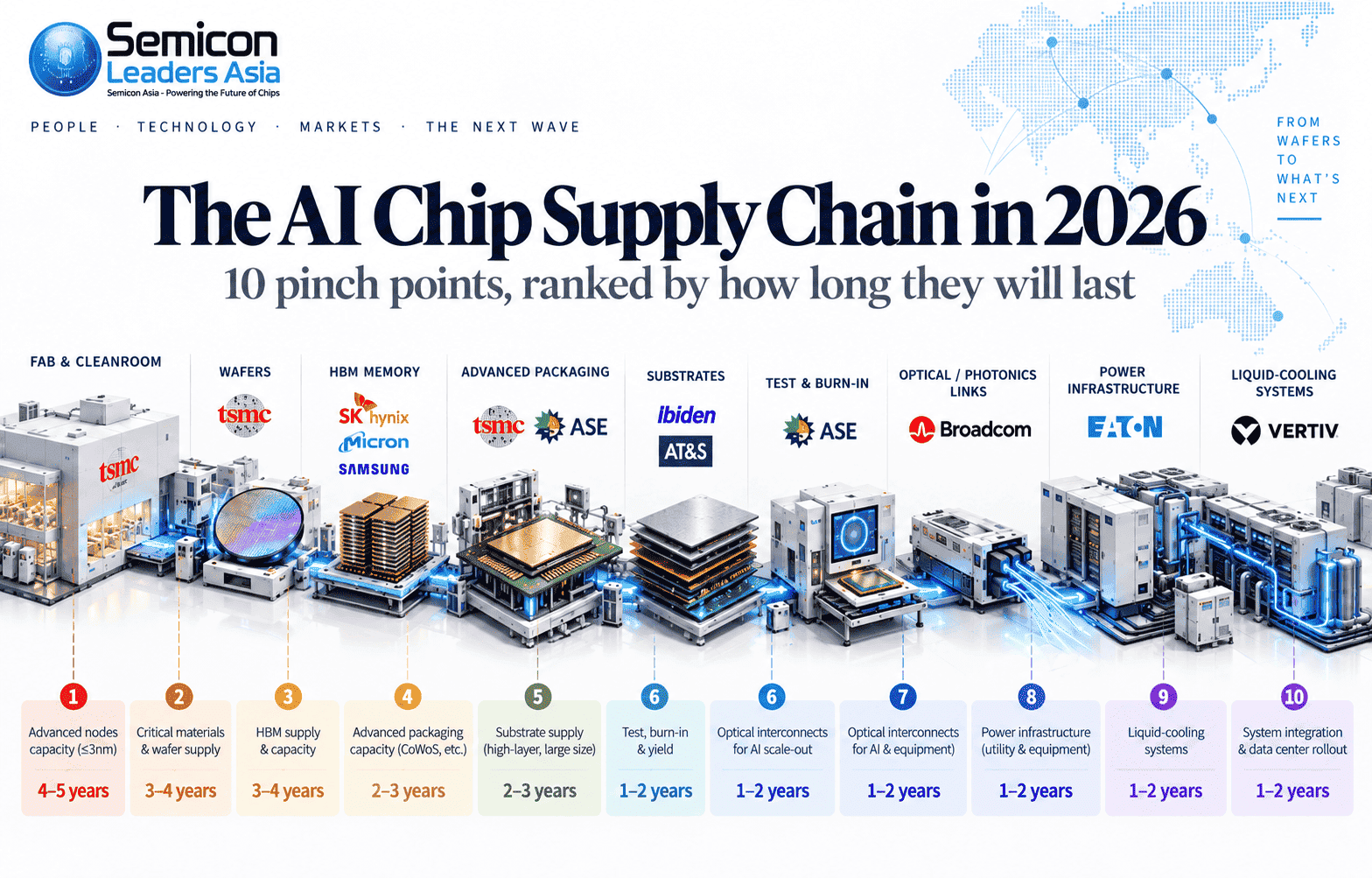
SEMICON LEADERS ASIA ANALYSIS | OCTOBER 2026 Key takeaways HBM is the most severe shortage of 2026, but not the most durable. Record memory capex should bring meaningful relief by 2028, even if supply does not fully normalise in 2027. Wafers, CoWoS-class packaging and liquid cooling are cyclical constraints. Committed capacity with visible start dates should ease them from the second half of ...
As demand for faster, more energy-efficient AI infrastructure grows, co-packaged optics (CPO) is creating new opportunities for Asia's semiconductor foundries, packaging providers and photonics manufacturers. However, scaling production requires advances in wafer bonding, materials integration and precision manufacturing. Semicon Leaders Asia speaks with Dr Bernd Dielacher, Director of Busine...
As AI infrastructure drives demand for higher-bandwidth, power-efficient optical connectivity, the challenge for silicon photonics companies is shifting from technological innovation to commercial-scale production. OpenLight is looking to capitalise on this transition through its heterogeneous silicon photonics platform, integrated laser technology and roadmap extending from 1.6T to 3.2T optical c...
KEY TAKEAWAYS Governments spent 2026 managing flows rather than stopping them: licences with conditions, tariffs with carve-outs, minerals rules backed by enforcement. Industrial policy moved beyond the fab into packaging, materials, equipment, design and talent, from New Delhi to Brussels to Seoul. For buyers, available capacity and accessible capacity are no longer the same thing. Complianc...
Method Communications announced that Allison DeLeo has joined the agency as Senior Vice President to expand its expertise in semiconductor and embedded technology ecosystems. DeLeo brings nearly 20 years of experience helping technology companies define their stories, build their reputations, and connect complex innovation to the audiences that matter most. "Some of the most important technology ...
Semiconductor headlines in 2026 have been unusually large. AI accelerator demand kept climbing. Memory prices surged. Washington rewrote parts of its China chip policy. Beijing's domestic AI hardware push gathered pace. India committed another ₹1,27,500 crore to semiconductors through Semicon 2.0, and Japan kept putting public and private capital behind Rapidus. The market numbers make the exci...