Chiplets Market to Reach $605 Billion by 2036 as AI and Advanced Packaging Drive Growth
AI, HPC and advanced 2.5D and 3D packaging are accelerating chiplet adoption, with Asia Pacific emerging as a key hub for next-generation semiconductor architectures.
The global chiplets market is projected to grow from $54 billion in 2025 to $605 billion by 2036, supported by rising AI and HPC workloads, advanced packaging adoption and demand for scalable semiconductor architectures.
The semiconductor industry is increasingly turning to chiplet-based architectures as conventional monolithic chip designs become more complex and costly at advanced process nodes. Chiplets allow manufacturers to combine multiple specialised dies within a single package, enabling greater flexibility in integrating compute, memory, I/O and accelerator functions.
According to a market study from Transparency Market Research, the chiplets industry is expected to expand at a 25.2% compound annual growth rate between 2026 and 2036. Growing demand for AI computing, high-performance computing, cloud infrastructure, data centres, automotive electronics and next-generation telecommunications is expected to remain a key driver.
AI Emerges as a Major Chiplet Growth Driver
The rapid expansion of AI workloads is increasing demand for computing platforms capable of delivering higher bandwidth, lower latency and greater processing efficiency. Chiplet architectures allow semiconductor companies to integrate multiple compute engines, memory components and I/O functions within a highly optimised package.
GPU-based chiplets accounted for approximately 44% of the market in 2025, reflecting strong demand from AI acceleration, HPC, hyperscale data centres and parallel computing applications.
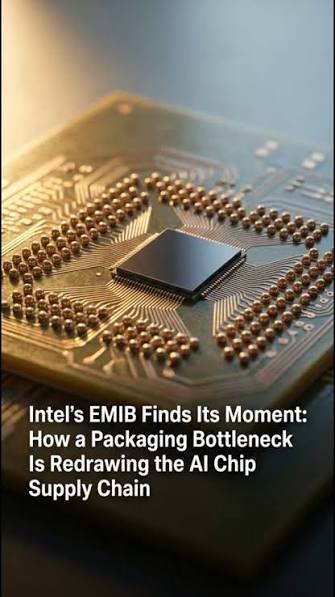
Advanced packaging is also becoming increasingly important to chiplet adoption. Technologies including 2.5D and 3D packaging, silicon interposers, embedded multi-die interconnect bridges and system-in-package architectures are enabling manufacturers to connect multiple dies while supporting increasingly sophisticated semiconductor designs.
Asia Pacific Leads Global Chiplet Adoption
Asia Pacific accounted for around 39% of global chiplet market revenue in 2025, supported by the region's extensive semiconductor manufacturing, foundry, packaging and electronics ecosystem.
The region is home to several major semiconductor manufacturers and advanced packaging providers, positioning it as a key hub for chiplet development and commercialisation. Continued investment in semiconductor manufacturing and packaging capacity is expected to strengthen its role as chiplet adoption expands.
Chiplet Adoption Extends Beyond AI
While AI and HPC are among the strongest growth drivers, chiplets are also creating opportunities across automotive electronics, edge AI, industrial automation, healthcare, aerospace and defence, telecommunications and consumer electronics.
Automotive applications such as autonomous driving, ADAS, infotainment and V2X communications require increasingly flexible and energy-efficient computing architectures. Chiplets can allow manufacturers to combine specialised processing, memory and connectivity functions within a single platform.
Edge AI is another emerging opportunity, particularly across industrial automation, smart cities, healthcare and IoT, where compact computing platforms need to balance performance, power consumption and scalability.
Interoperability and Testing Remain Challenges
Despite the growth outlook, the chiplet ecosystem still faces several challenges. Interoperability, thermal management, power delivery, testing, design complexity and the lack of universally adopted standards could affect wider adoption.
Ensuring reliable communication between chiplets produced by different suppliers and using different manufacturing processes remains particularly important. As multi-die systems become more complex, industry efforts around interconnect standards, advanced packaging, thermal management, design automation and testing will be critical to commercial deployment.
Semiconductor Industry Moves Towards Heterogeneous Integration
The growing chiplet market reflects a broader shift towards heterogeneous integration, as semiconductor companies seek alternatives to increasingly expensive monolithic designs.
Major companies including AMD, Intel, Nvidia, Broadcom, Marvell Technology, MediaTek, Qualcomm, Samsung Electronics, TSMC, ASE Technology, IBM and Renesas Electronics are participating in the wider chiplet ecosystem, with efforts spanning advanced packaging, high-speed interconnects, interoperability and energy-efficient architectures.
With AI, data centres and advanced computing continuing to drive semiconductor demand, chiplets are expected to become an increasingly important approach to scaling performance. Improvements in packaging, interconnects and multi-die testing could further accelerate the transition towards chiplet-based systems through 2036.