Hanmi Semiconductor Invests $94 Million in New Incheon Plant to Expand HBM and AI Chip Equipment Capacity
Hanmi Semiconductor to Build Largest-Ever Production Facility as HBM and AI Packaging Demand Grows
South Korean semiconductor equipment maker Hanmi Semiconductor is investing approximately KRW 130 billion (around US$94 million) to establish its eighth production facility in Incheon, marking the largest manufacturing investment in the company’s history. The expansion comes as demand for equipment used in artificial intelligence (AI) semiconductor and high-bandwidth memory (HBM) production continues to increase.
Hanmi will acquire an existing manufacturing site from Mercury Co. in the Juan National Industrial Complex in Incheon. The facility covers roughly 20,600 square metres and will become the company’s largest production site by floor area. Around KRW 56 billion of the total investment will be allocated towards purchasing the property, with the remaining funds earmarked for refurbishment and production infrastructure.
The company plans to renovate the site and install advanced manufacturing equipment, with mass production scheduled to begin in the second quarter of 2027.
New Facility to Support HBM and AI Chip Packaging
Hanmi plans to use the new plant to manufacture a range of semiconductor packaging equipment, including thermal compression (TC) bonders and hybrid bonders for HBM, as well as 2.5D packaging equipment for AI chips. The facility will also produce BOC and COB equipment for high-performance memory applications.
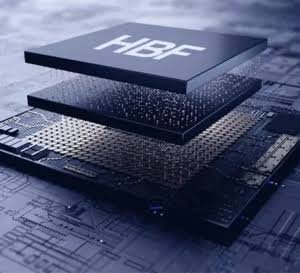
The investment reflects growing demand for advanced packaging technologies as AI accelerators require increasingly sophisticated memory architectures. HBM has become a critical component of AI computing systems, increasing demand for specialised equipment capable of stacking and connecting memory dies with high precision.
Hanmi is already expanding its manufacturing footprint through its seventh facility, which is dedicated to hybrid bonders and is scheduled for completion during the first half of 2027. The company invested approximately KRW 100 billion in the seventh plant.
Capacity Expansion Targets Expected Equipment Demand
Hanmi’s latest investment follows expectations that semiconductor equipment supply could become increasingly constrained as AI-related chip production expands. Company Chairman and CEO Kwak Dong-shin previously indicated that demand for the company’s equipment could outpace production capacity from 2027 as memory manufacturers increase investment in HBM.
Once the seventh and eighth plants are operational, Hanmi expects its total production-line floor area to reach approximately 34,318 pyeong, significantly expanding its manufacturing capacity.
The company has also been developing its hybrid-bonding portfolio to prepare for future generations of HBM. Hybrid bonding is expected to become increasingly important as memory stacks become taller and manufacturers seek higher bandwidth and lower power consumption.
AI Boom Drives Semiconductor Packaging Investment
The expansion highlights the growing link between AI infrastructure investment and semiconductor manufacturing equipment. AI accelerators require large amounts of high-speed memory, while the increasing complexity of HBM architectures is creating additional demand for advanced bonding and packaging technologies.
Hanmi has strengthened its position in the HBM equipment market through its TC bonder business and is now investing in hybrid bonding to address the requirements of future memory generations. The company has also recently established plans for a US subsidiary to provide local equipment development, sales and technical support as AI and HBM manufacturing investment expands in the US.
With its seventh and eighth production facilities being developed in parallel, Hanmi is positioning itself to increase manufacturing capacity and respond to anticipated growth in AI semiconductor packaging. The new plant is expected to play a central role in supporting the company’s expansion into next-generation HBM and AI packaging equipment.