Nvidia’s SpaceX Stake Reaches $17.2 Billion as AI Ties Deepen
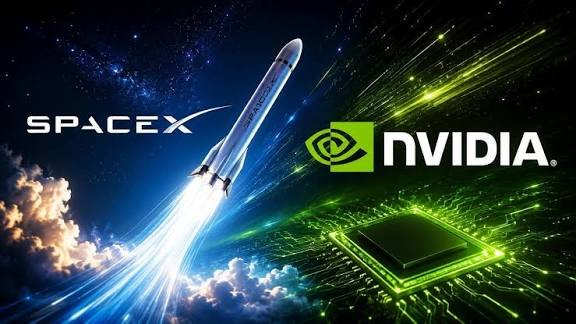
Nvidia has become one of SpaceX’s largest institutional investors, with its 122.8 million-share holding providing the chipmaker with significant exposure to Elon Musk’s expanding AI and space technology ecosystem.
Nvidia has emerged as one of the largest institutional shareholders in SpaceX, with its holding currently valued at approximately $17.2 billion, according to regulatory filings and market data. The semiconductor company disclosed that it owns around 122.8 million Class A shares in the Elon Musk-led aerospace and technology company.
Nvidia’s SpaceX investment was valued at about $21 billion at the end of the second quarter of 2026. However, the value of the holding has since fallen as SpaceX’s share price declined from $170.86 at the end of June to around $140 on 14 August.
Nvidia’s Second-Largest Investment
The SpaceX holding is now Nvidia’s second-largest investment after Intel. Nvidia’s Intel position, initially established with a $5 billion investment, was worth roughly $30 billion at the end of the second quarter before falling to around $22 billion after Intel’s share price moved.
FactSet data indicates that Nvidia ranks among SpaceX’s largest shareholders, behind companies including Alphabet and Elon Musk. Musk remains the company’s dominant shareholder, with his SpaceX ownership valued at hundreds of billions of dollars.
Investment Linked to xAI
Nvidia’s position with SpaceX originated from its investment in xAI, Musk’s artificial intelligence company. Nvidia reportedly contributed $10 billion to a $20 billion xAI funding round in January. Following the subsequent integration of xAI with SpaceX, Nvidia received an indirect position in the combined business through its xAI investment.
The development highlights the increasingly interconnected nature of Nvidia’s investments across the artificial intelligence ecosystem, where the chipmaker is combining financial investments with commercial relationships involving major AI infrastructure customers.
SpaceX to Rely on Nvidia AI Hardware
The relationship between the two companies extends beyond Nvidia’s equity holding. SpaceX has indicated that it plans to use Nvidia hardware exclusively for its AI data centres, strengthening the strategic link between the two businesses. Musk has also spoken positively about Nvidia’s GPU architecture for both AI model training and inference.
SpaceX is expanding its computing infrastructure as it develops its AI operations, while Nvidia continues to deepen relationships with companies building large-scale AI systems. The partnership therefore gives Nvidia exposure not only to SpaceX’s growth as an aerospace and connectivity business, but also to its expanding AI ambitions.
The SpaceX investment is another example of Nvidia using its financial strength to establish strategic positions across the broader AI ecosystem, alongside its core business of supplying processors, networking technologies and computing platforms.