Lumotive Unveils 180° Solid-State LiDAR Platform to Cut Costs and Boost Autonomy
Breakthrough with Adaps Photonics delivers wider coverage, higher frame rates and reduced sensor complexity for next-gen robotics and mobility
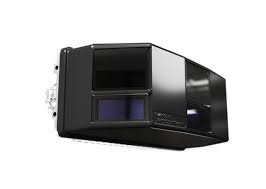
Lumotive, a pioneer in programmable optical semiconductors, announced that its commercially available LM10 Light Control Metasurface (LCM), combined with the Adaps Photonics ADS6311 "Hawk" dTOF sensor, enabled a fully solid-state 180° LiDAR platform for outdoor autonomy, achieving 30 frames per second. This breakthrough eliminates sensing blind spots, delivers real-time tracking of fast-moving objects, and lowers the overall cost of ownership by reducing the number of sensors required to meet advanced safety and autonomy requirements.
By electronically steering light at semiconductor speed, the LCM platform enables system architects to push dTOF sensors to performance regimes previously limited by mechanical scanning or fixed channel count VCSEL arrays. The full 180° horizontal coverage eliminates blind spots in safety-critical applications while reducing sensor count, integration complexity and overall system cost. The platform also enables up to 140° vertical coverage (configurable in software), critical for detecting objects or obstructions near autonomous platforms. The vertical FOV is programmable, and the range, frame rate and resolution parameters can be defined for different vertical regions of interest.
Delivering 30 frames per second (fps), the LCM-based architecture doubles the typical 15 fps performance seen in many current dTOF implementations while extending range performance up to 50 meters, maintaining reliable perception in rain, dust and low-visibility scenarios where traditional sensors degrade. Lumotive's LCM scanning architecture significantly improves point cloud quality by mitigating common artefacts like multipath, blooming and sensor-to-sensor interference.
"180° perception is already a breakthrough, but Lumotive's real innovation is achieving it while simultaneously doubling frame rate, extending range and improving point cloud quality. This will advance a long list of robotics, heavy equipment and smart infrastructure applications that have been waiting for highly accurate 3D sensors with wider coverage to achieve their safety and autonomy objectives," said Apurva Jain, SVP of Product & Marketing at Lumotive. "Our LCM platform addresses fundamental limitations that have held back autonomous systems by delivering software-programmable beam steering with semiconductor manufacturing scalability - turning optics into a programmable layer that accelerates the entire dTOF ecosystem."
Lumotive's LCM platform enables key capabilities like:
- Platform-Level Performance Scaling: LCM enables advanced dTOF sensors to achieve wider field of view, higher frame rates, and unprecedented programmability, extending use cases and enabling edge-AI integrations.
- Complete 180° Horizontal Coverage: Eliminates dangerous blind spots with seamless ultra-wide field of view, enabling comprehensive environmental awareness for autonomous systems with the fewest sensors, lowering total cost of ownership.
- Extreme Frame Rates: Delivers 30 fps for full-frame scanning with the ability to reach 900 Hz refresh rates in user-defined regions of interest, enabling real-time tracking of fast-moving objects. This represents one of the highest frame rates ever achieved for a fully solid-state 180° outdoor dTOF platform.
- Software-Defined Sensing: Programmable scan patterns and multi-ROI sensing allow dynamic resource allocation based on scene complexity, reducing the number of sensors needed and implementing "detect what matters, where it matters" strategies.
- Solid-State Reliability: All-electronic beam steering with no moving parts dramatically improves robustness, deployment lifetime, and vibration resistance compared to mechanical scanning.
- Direct Time-of-Flight Architecture: Purpose-designed for outdoor operation with mid-range performance up to 50 meters and software-defined range allocation, ensuring robust perception in challenging conditions.
"The combination of Lumotive's programmable LCM beam steering with our ADS6311 'Hawk' chip with Adaps Photonics's proprietary dTOF architecture unlocks a new class of sensing performance," said Andrew Lee, VP of System at Adaps Photonics. "By enabling ultra-wide 180° coverage and higher frame rates without mechanical scanning, Lumotive's platform allows advanced dTOF sensors to operate at capabilities that were previously not achievable. This collaboration demonstrates how programmable optics and high-performance time-of-flight sensing at the chip-level can accelerate the next generation of autonomous systems."
This milestone reflects a broader industry shift, moving optical performance from fixed hardware constraints into software-defined semiconductor platforms. The LCM-based reference design is now available to LiDAR developers and module manufacturers building next-generation sensing architectures. Ecosystem partners are already building on the platform, including Namuga, which recently showcased its Stella-180 prototype based on Lumotive's programmable optics with sample availability for OEMs targeted for later this year.