Hoth Therapeutics to Rebrand as Rocket One and Expand into AI Semiconductor Infrastructure and Spintronic Computing
Company secures exclusive rights to spintronic AI acceleration technologies from Virginia Commonwealth University as it targets ultra-low-power AI computing, advanced semiconductor architectures, and next-generation intelligent infrastructure markets.
HOTH ("Hoth" or the "Company") announced that it intends to change its name to Rocket One, Inc. ("Rocket One") and to restructure its business to position the Company, through its recently formed wholly-owned subsidiary, to pursue opportunities in artificial intelligence infrastructure, next-generation semiconductor technologies, and ultra-low-power AI computing.
Under its soon to be newly rebranded name, Rocket One, Inc., and the newly obtained licenses, the Company will enter the expanding AI semiconductor market, with exclusive rights to AI Semiconductor Acceleration Technology Built on Non-Volatile Nanomagnetic Semiconductor Architecture and to spintronic computing technologies developed at Virginia Commonwealth University ("VCU") targeting one of the largest challenges facing artificial intelligence today: power consumption and computing efficiency.
The Company intends to continue its biotechnology programs and is exploring placing its biotechnology assets in a separate, wholly owned subsidiary.
The refocusing of the business was unanimously approved by the Company's Board of Directors. Additional details regarding the licenses and proposed business will be included in a Current Report on Form 8-K that will be filed in a timely manner with the Securities and Exchange Commission.
AI Infrastructure Is Reaching a Breaking Point
Artificial intelligence has become the defining workload of modern computing, driving an unprecedented global buildout of AI data centres, autonomous systems, edge AI infrastructure, and high-performance computing environments.
But the AI industry is increasingly constrained by:
- escalating power consumption
- cooling limitations
- memory bottlenecks
- inference latency
- rising infrastructure costs
As demand for large language models, generative AI, and autonomous systems accelerates globally, the world's largest technology companies are actively searching for next-generation semiconductor architectures capable of delivering dramatically improved efficiency beyond conventional silicon approaches.
The Company believes solving these infrastructure constraints represents one of the most significant opportunities in the future of artificial intelligence.
Exclusive AI Semiconductor and Spintronic Computing Portfolio
Rocket One has secured exclusive rights to what it believes are two complementary spintronic semiconductor technologies. And
Nanomagnetic Matrix Multiplier — AI Hardware Acceleration
The Company secured exclusive rights to
"A compact, low-energy, non-volatile nanomagnetic matrix multiplier as a hardware accelerator for machine learning and artificial intelligence."
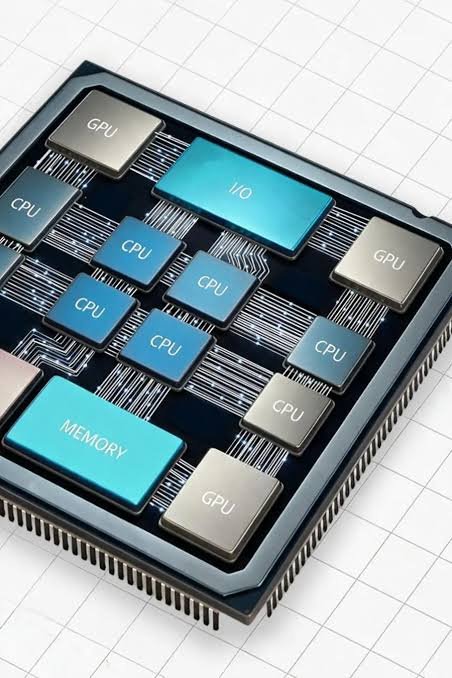
Matrix multiplication is the foundational operation underlying virtually all modern AI workloads, including transformer architectures powering large language models and generative artificial intelligence systems.
The licensed architecture is designed to support:
- ultra-low-power AI acceleration
- next-generation AI inference
- advanced memory efficiency
- edge AI systems
- intelligent autonomous platforms
- distributed AI infrastructure
The second technology utilizes electron spin rather than conventional charge-based semiconductor approaches and is intended to address growing energy efficiency constraints in AI computing infrastructure.
Spintronic Memory Platform — Defense, Autonomous Systems, and Space Computing
Rocket One secured exclusive rights to spintronic memory technologies designed for advanced computing and information processing applications with potential relevance to:
- radiation-tolerant computing
- defense infrastructure
- autonomous aerospace systems
- resilient edge compute
- orbital AI environments
- next-generation intelligent systems
The Company believes the same underlying spintronic physics supporting AI acceleration may also provide long-term opportunities across defense and space-based computing infrastructure markets.
Building an AI Infrastructure Platform
The Company intends to pursue a capital-efficient growth strategy focused on:
- semiconductor infrastructure partnerships
- AI hardware commercialization
- sponsored research
- strategic acquisitions
- defense and aerospace opportunities
- advanced compute infrastructure
- intelligent edge systems
The Company also plans to expand leadership with expertise spanning:
- semiconductor operations
- AI infrastructure
- advanced computing architectures
- defense technologies
- high-performance computing
Management Commentary
"Artificial intelligence is rapidly transforming every major industry, but the infrastructure powering AI is approaching critical energy and efficiency limits," said Robb Knie, Chief Executive Officer.
"We believe next-generation semiconductor architectures capable of dramatically improving power efficiency, memory performance, and intelligent computing scalability represent one of the largest opportunities in global technology today. Rocket One is being built to position the Company to participate in the future of AI infrastructure."
Biotechnology Operations Continue Under Subsidiary Structure
The Company 's is exploring placing its biotechnology pipeline and therapeutic development programs under a separate, wholly owned subsidiary with dedicated management and operational resources. The restructuring is intended to preserve the value of the biotechnology portfolio for shareholders while enabling the parent company to pursue emerging opportunities in AI semiconductor infrastructure and advanced computing technologies.