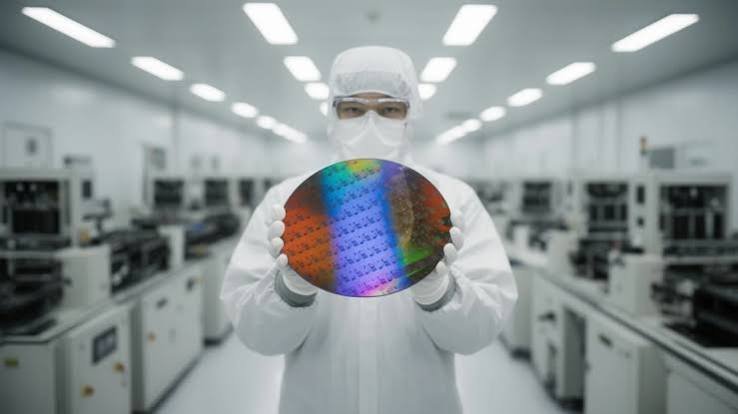
Powerchip Plans 10% to 20% Wafer Foundry Price Hikes in 2027
Taiwan's PSMC is negotiating higher wafer prices and long-term supply contracts as demand for AI server chips, power semiconductors and specialised memory keeps manufacturing capacity tight.
Taiwan-based Powerchip Semiconductor Manufacturing Corporation (PSMC) plans to raise mature-node wafer foundry prices by 10% to 20% in 2027, as demand from artificial intelligence infrastructure, automotive electronics and memory customers continues to put pressure on available production capacity.
The company disclosed the pricing plans during its third-quarter earnings conference on 21 October 2026, following a period of higher wafer prices and improved manufacturing utilisation.
PSMC is negotiating new pricing arrangements with customers and intends to give priority to companies that commit to long-term supply agreements covering both wafer volumes and prices.
The proposed increases follow earlier adjustments to its eight-inch and 12-inch logic foundry services, where average wafer input prices rose by approximately 8% to 10% during the third quarter.
The company has not confirmed that all customers or product categories will be subject to the full proposed increases.
Powerchip Reports 80% Revenue Growth in Third Quarter
PSMC reported third-quarter revenue of NT$21.34 billion (approximately US$654 million), representing an increase of 23% from the previous quarter and 80% compared with the same period in 2025.
Net profit reached NT$6.5 billion, almost doubling sequentially, while gross margin increased to 48% from 28% in the second quarter.
The company attributed the improvement to higher average selling prices, stronger factory utilisation and changes to its manufacturing operations following the closure of production at its Tongluo facility.
PSMC expects fourth-quarter revenue to increase by a double-digit percentage from the preceding quarter as earlier wafer price adjustments begin to contribute more fully to recognised sales.
The company explained that foundry prices are generally agreed when wafers enter production, creating a delay before increases are reflected in revenue.
Manufacturing cycles typically last two to three months for logic products and three to four months for memory devices.
As a result, higher prices agreed during recent months are expected to continue affecting financial performance into the final quarter of 2026.
AI Servers and Automotive Chips Drive Foundry Demand
Demand for power management integrated circuits (PMICs) has become an important factor behind the company's pricing plans.
PSMC reported strong orders for power management devices used in AI servers and automotive electronics, where manufacturers require reliable power conversion and distribution components.
The company has expanded its bipolar-CMOS-DMOS (BCD) manufacturing technology to 55 nm, supporting the production of power management chips for AI infrastructure and other applications.
Production using the 55 nm BCD process has already begun, while some customers are seeking supply agreements extending for as long as three years.
Long-term contracts are also becoming more common in the company's power semiconductor business.
According to PSMC, approximately 80% of its planned 2027 production capacity for MOSFET and IGBT devices is already covered by long-term supply agreements.
These commitments provide greater visibility over future demand, although actual shipments will depend on customer orders and manufacturing schedules.
The company intends to allocate available capacity to customers with established contractual commitments before accepting additional orders.
Memory Shortages Support Higher Foundry Prices
Memory manufacturing is another area contributing to PSMC's improved outlook.
The company said rising demand for high-bandwidth memory (HBM) is encouraging major DRAM manufacturers to redirect production capacity towards advanced memory products.
This shift has reduced the capacity available for certain conventional DRAM products, including those used in industrial equipment, communications systems and automotive electronics.
PSMC expects demand for specialised DRAM manufacturing services to remain firm as customers seek alternative sources for established memory products.
The company has also identified supply constraints in NAND flash manufacturing.
As major suppliers adjust their product portfolios and reduce production of some older memory technologies, customers requiring those products are looking for additional manufacturing capacity.
PSMC is developing its 24 nm SLC NAND process platform and working with customers on memory products designed for applications requiring longer product lifecycles.
The company believes these market conditions could help sustain demand for its memory foundry services through 2027.
Powerchip Considers New Manufacturing Capacity in Asia
Alongside the pricing changes, PSMC is examining opportunities to expand its manufacturing footprint over the next three to five years.
The company is assessing potential locations in Taiwan, Singapore and Japan for a new semiconductor facility focused on advanced packaging-related technologies.
The proposed expansion could support wafer-level processing, silicon interposers and integrated passive devices (IPDs) used in high-performance computing and AI semiconductor packages.
PSMC said demand for IPDs could reach 50,000 wafers per month during the second half of 2027, compared with its existing monthly capacity of approximately 10,000 wafers.
The company is also seeking greater customer participation in financing future production facilities.
Under its proposed approach, customers could contribute between 30% and 60% of the investment required for new production lines through advance payments or equipment leasing arrangements.
PSMC has cited its existing collaboration with Micron Technology as an example of how customer-funded manufacturing investments can support capacity expansion.
No final location or construction schedule has been announced for the proposed new facility.
Advanced Packaging Adds Another Growth Opportunity
PSMC is expanding its semiconductor packaging-related business as AI processors require more complex integration between logic chips, memory and other components.
Its development activities include silicon interposers, integrated passive devices and wafer-on-wafer stacking technologies.
The company is working on hybrid bonding processes that could support denser semiconductor integration in future computing systems.
It has also been developing post-wafer-finish services in cooperation with Micron, with further production development planned during 2027.
These activities could provide additional revenue sources beyond conventional logic and memory wafer fabrication.
However, their commercial contribution will depend on production readiness, customer qualification and the timing of manufacturing capacity additions.
Mature-Node Foundry Pricing Becomes a Key Issue for 2027
PSMC's proposed price increases reflect changing market conditions for mature-node semiconductor manufacturing.
While investment in advanced logic continues to receive substantial attention, established manufacturing processes remain important for power management, automotive electronics, industrial controls and memory products.
Strong demand for these components can create capacity constraints even when the products do not require the latest transistor technology.
For semiconductor customers across Asia, higher foundry prices could increase manufacturing costs and encourage longer-term supply agreements to secure production capacity.
The changes may also affect fabless chip designers and electronics manufacturers that depend on eight-inch and 12-inch mature-node production.
For PSMC, the immediate priority will be negotiating 2027 prices and volumes while maintaining high factory utilisation.
The extent to which the proposed 10% to 20% increases are implemented will depend on customer agreements, demand conditions and the availability of competing foundry capacity.
The company's fourth-quarter results and subsequent customer contracts will provide a clearer indication of whether the current supply constraints are likely to persist through 2027.