Odisha Steps Up Semiconductor Ambitions with ₹23,600 Crore Investment Proposals
State showcases expanding semiconductor capabilities at SEMICON India 2026, with proposed investments expected to create around 6,100 employment opportunities.
Odisha is stepping up its efforts to establish itself as a significant semiconductor and electronics hub, showcasing its expanding capabilities across the value chain at SEMICON India 2026 in New Delhi.
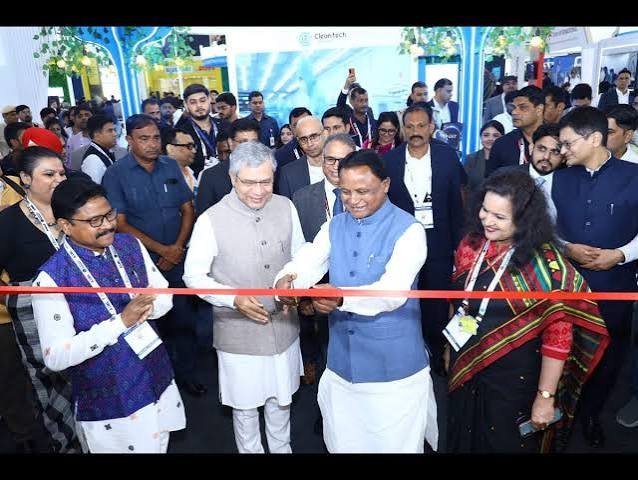
Union Minister for Electronics and Information Technology Ashwini Vaishnaw and Odisha Chief Minister Mohan Charan Majhi inaugurated the Odisha Pavilion at Yashobhoomi, where the state highlighted developments spanning silicon carbide (SiC) semiconductors, advanced packaging, glass-substrate technologies, power electronics, chip design and semiconductor education.
The state government said it received investment proposals worth approximately ₹23,600 crore, with the projects having the potential to create around 6,100 employment opportunities. Odisha views these investments as an important step towards developing a more comprehensive semiconductor and electronics ecosystem under Semicon 2.0.
Expanding Industry Engagement
During the exhibition, Odisha held discussions with semiconductor and technology companies, industry organisations and international delegations from markets including Japan, Sweden and Taiwan.
Companies engaging with the state included Lam Research, Applied Materials, SiCSem, 3D Glass Solutions, Cyient, Linde and HORIBA India, highlighting the growing interest in Odisha's plans for semiconductor-related manufacturing and supporting infrastructure.
A further step came through the signing of a Letter of Intent with QuadQuantum for a proposed facility focused on manufacturing silicon carbide substrate wafers. The project is expected to add to Odisha's ambitions to develop capabilities across multiple stages of semiconductor production.
Odisha Silicon Valley Project
A central element of the state's strategy is the proposed Odisha Silicon Valley, an 870-acre development planned at Naraj near Cuttack.
The site is intended to accommodate major electronics and information technology projects and has access to the Cuttack-Bhubaneswar urban corridor, national highways and ports including Paradip and Dhamra.
Its proximity to the Mahanadi is also expected to support industrial water requirements, while the site's connectivity could help facilitate semiconductor supply chains, logistics operations and related industries.
Odisha sees the development as a potential foundation for a broader electronics and semiconductor cluster rather than focusing solely on individual manufacturing projects.
Building Capabilities from Materials to Chips
The Odisha Pavilion featured projects from RIR Power, SiCSem, 3D Glass Solutions (3DGS) and ARF Design, alongside academic institutions including NIT Rourkela and PMEC Brahmapur.
The participating educational institutions are working on the development of what the state describes as its first batch of Made in India chips, highlighting the role of local talent and research alongside industrial investment.
Odisha is also updating its semiconductor policy in line with the evolving objectives of India Semiconductor Mission 2.0. Under its latest policy amendment, the state has extended an additional 25% fiscal support to ISM-approved projects covering semiconductor equipment manufacturing, semiconductor-grade gases, raw materials and supply-chain activities.
Focus on Talent and Research
Beyond capital investment, the state is seeking to strengthen the workforce required to support semiconductor manufacturing and related technology industries.
Its policy framework includes measures covering engineer relocation, workforce training, internships, international patent development and research and development.
The approach reflects Odisha's broader effort to combine industrial infrastructure with skills development and innovation as it seeks to build a sustainable semiconductor ecosystem.
The state's pavilion also featured a “Sand to Silicon” installation, illustrating Odisha's semiconductor ambitions and its vision of transitioning from a resource-led “Mine Economy” towards a knowledge- and innovation-driven “Mind Economy”.
Strengthening India's Semiconductor Ecosystem
Odisha's presence at SEMICON India 2026 reflects its wider strategy to attract semiconductor investment while developing the infrastructure, skills, research capabilities and supply-chain networks required to support the industry.
With proposed investments of approximately ₹23,600 crore, potential employment generation of 6,100 jobs, and projects spanning SiC wafers, packaging, power electronics, materials and chip design, the state is positioning its semiconductor strategy around a broader ecosystem rather than individual facilities.
The initiatives are aligned with India's wider ambition to establish domestic semiconductor manufacturing and supply-chain capabilities, while creating opportunities for states such as Odisha to participate in the country's expanding electronics and chip industry.